When the Vote Doesn't Speak: Confronting the Crisis of Electoral Legitimacy in America

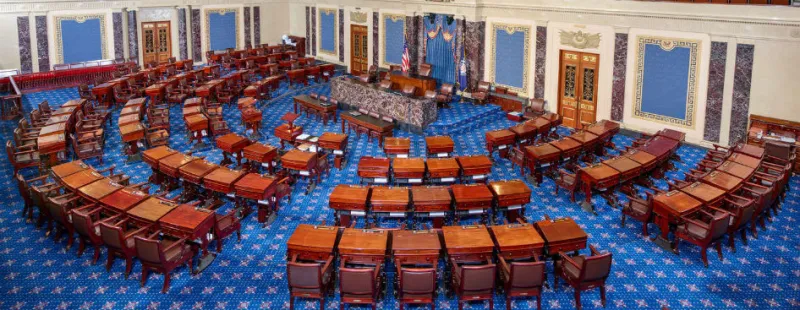
Photo: Newspaper Enterprise Association (N.E.A.), No restrictions, via Wikimedia Commons
There is a foundational promise embedded in the phrase "government by the people." It is the promise that citizens, through the act of voting, exercise meaningful authority over those who govern them. For a significant and growing portion of the American public, that promise feels increasingly hollow.
Polling data from 2017 consistently shows that voter skepticism about the integrity and representational fairness of American elections has reached levels that should concern anyone invested in the health of democratic institutions. This is not simply a partisan phenomenon. Doubt crosses party lines, demographic groups, and geographic regions. The question at the center of this crisis is not merely whether ballots are counted accurately — though that matters enormously — but whether the broader architecture of American elections actually translates the will of voters into governing outcomes.
The Gap Between Voting and Governing
Consider the basic expectation most Americans carry into the voting booth: that their choice, aggregated with the choices of their fellow citizens, will produce a government that reflects the priorities of the majority. In practice, the relationship between votes cast and policy enacted is far more complicated — and far more susceptible to distortion.
Winner-take-all systems, which govern most federal and state elections in the United States, routinely produce legislatures and executives whose ideological composition diverges substantially from the preferences of the overall electorate. A candidate can win a statewide office with 51 percent of the vote, yet govern as though they received a mandate from the entire population. Conversely, the millions of voters who supported losing candidates find themselves entirely unrepresented in the outcome, their ballots effectively nullified by the arithmetic of plurality voting.
This structural reality feeds a legitimate sense among many Americans that their participation is conditional — that their vote counts only if they happen to live in the right place and support the right candidate. That is not a misperception. It is an accurate reading of how the system functions.
The Geography of Electoral Power
No feature of the American electoral landscape illustrates this disparity more vividly than the concentration of presidential campaign attention on a narrow band of competitive states. In 2016, the vast majority of campaign resources — advertising dollars, candidate appearances, ground operations — were deployed in fewer than a dozen states. The remaining forty-plus states, regardless of their population or the intensity of civic engagement within them, were largely treated as foregone conclusions.
For voters in states that reliably favor one party or the other, the message is difficult to misread: your presidential vote is a formality. The decision about who occupies the Oval Office will be made by your neighbors in Pennsylvania, Ohio, Florida, and a handful of other perennial battlegrounds. This geographic concentration of electoral relevance does not merely feel unfair — it structurally diminishes the democratic weight of the majority of American voters.
The Electoral College, the mechanism that produces this outcome, was designed in a specific historical context that no longer reflects the social or political realities of the twenty-first century. Whatever one's position on whether it should be reformed or replaced, the demonstrable effect of the current system on voter engagement and perceived legitimacy deserves serious public deliberation — not partisan deflection.
Barriers at the Ballot Box
Beyond structural questions about how votes are counted lies the more immediate issue of who is permitted to vote in the first place. Voter suppression — whether through restrictive identification requirements, aggressive purges of voter rolls, reduced polling place availability in specific communities, or limitations on early and absentee voting — operates as a quiet but consequential filter on the electorate.
These measures do not fall randomly across the population. Research consistently demonstrates that their burden falls disproportionately on communities of color, low-income voters, elderly citizens, and young Americans. When the pool of eligible voters is systematically narrowed through administrative and legislative mechanisms, the resulting election cannot honestly be said to represent the full consent of the governed. It represents the consent of those who were permitted — or able — to navigate the barriers placed before them.
Election administrators at the state and county level hold enormous discretionary power over these processes, yet most operate with minimal public scrutiny. Decisions about polling place locations, voter roll maintenance procedures, and ballot design are made by officials whose names many constituents could not recall. That opacity is itself a democratic problem.
Rebuilding Confidence From the Ground Up
Acknowledging the legitimacy of voter skepticism is not the same as endorsing cynicism or withdrawal. The appropriate response to a system that is failing to fully represent its citizens is not disengagement — it is organized, informed, and persistent civic pressure for reform.
There are concrete avenues through which Americans can begin to close the gap between the elections they experience and the elections they deserve.
Engage local election administration directly. Most states allow residents to observe election processes, attend canvassing board meetings, and comment on proposed changes to voting procedures. Election administrators are public officials accountable to the communities they serve. Treating them as such — attending meetings, submitting public comment, running for positions on election boards — is among the most direct forms of democratic participation available.
Advocate for structural reforms that expand representational fairness. Ranked-choice voting, which allows voters to express preferences among multiple candidates rather than committing to a single choice, has been adopted in a growing number of jurisdictions and consistently produces outcomes that better reflect the breadth of voter preferences. Automatic voter registration, which has been implemented in several states, removes administrative barriers without compromising electoral security. National popular vote compacts, which would effectively realign presidential campaign incentives toward the full national electorate, represent another avenue for reform that does not require a constitutional amendment.
Demand transparency from election officials. Voters have a right to understand how their ballots are processed, how voter rolls are maintained, and what standards govern decisions about polling place availability. Public records requests, attendance at election board hearings, and direct communication with county clerks and secretaries of state are all mechanisms through which citizens can hold administrators accountable.
Support and participate in nonpartisan election monitoring efforts. Organizations that observe elections, track administrative irregularities, and publish findings on electoral integrity provide an essential check on the system. Their work is most effective when it is supported by an engaged citizenry that takes the details of election administration seriously.
The Obligation of Democratic Citizenship
The consent of the governed is not a passive concept. It does not flow automatically from the act of casting a ballot. It must be actively constructed and continuously defended through the sustained engagement of citizens who refuse to accept the distance between democratic promise and democratic reality.
The skepticism many Americans feel about their elections is, in significant measure, a rational response to documented structural failures. Dismissing that skepticism as uninformed or dangerous does nothing to address the conditions that produced it. What is required instead is the honest acknowledgment that the American electoral system, as currently constituted, does not fully deliver on its foundational commitments — and the collective determination to change that.
At PDP 2017, we believe that a platform built for every American must begin with elections that genuinely represent every American. That work starts now, in the spaces between elections, in the meetings most people never attend, and in the demands citizens place on the officials who administer the processes upon which self-governance depends.