Follow the Dollars: How Campaign Finance Rules Decide Who Gets to Govern America
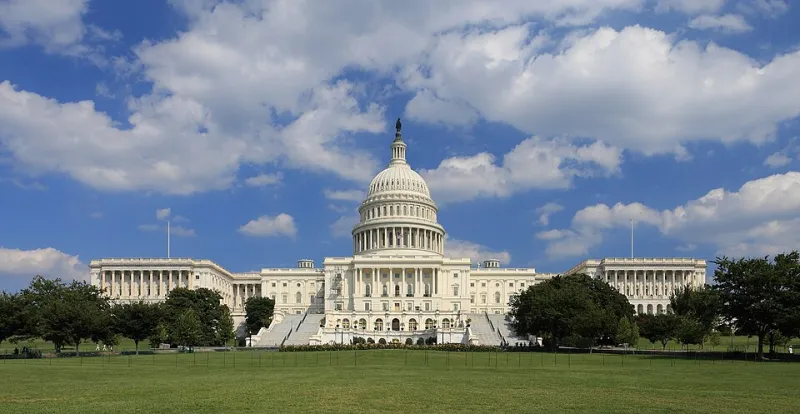
Photo: Martin Falbisoner, CC BY-SA 3.0, via Wikimedia Commons
When a first-generation American schoolteacher in Ohio decides she wants to run for her state legislature, she faces a challenge that has nothing to do with her qualifications, her ideas, or her community's support. Before she can knock on a single door or shake a single hand, she must confront a financial system that was not designed with her in mind. Campaign finance in the United States, shaped by decades of court rulings and legislative compromise, has produced a political environment where access to large donor networks often determines viability before the first vote is ever cast.
This is not a partisan observation. It is a structural reality that affects candidates across the political spectrum who lack ties to established money networks. And in 2017, as a wave of first-time candidates began testing the boundaries of that system, the mechanics of campaign finance moved from the policy margins to the center of a broader national conversation about representation.
The Architecture of Financial Gatekeeping
At the federal level, the post-Citizens United landscape has fundamentally altered the relationship between money and political access. The Supreme Court's 2010 ruling opened the door to unlimited independent expenditures by corporations and outside groups, creating a parallel campaign infrastructure that operates largely beyond the reach of traditional disclosure requirements. Super PACs, 501(c)(4) organizations, and other vehicles for so-called dark money have since become fixtures of congressional and presidential races.
But the effects trickle down further than most Americans realize. State legislative races, county commission contests, and even school board elections have seen outside money flow in at levels that would have been unimaginable a generation ago. For a candidate running without access to that infrastructure — someone who has not cultivated relationships with major donors, industry groups, or party establishment figures — the financial disadvantage can be insurmountable before the campaign formally begins.
The Federal Election Commission's own data tells a sobering story. In competitive congressional districts, incumbents routinely outraise challengers by ratios of three or four to one. Among those challengers who do manage to close the gap, a significant share rely on a small number of high-dollar donors rather than broad-based grassroots support. The candidate who draws genuine enthusiasm from a neighborhood but cannot tap a professional fundraising network remains, by the logic of the current system, a long shot almost by definition.
Reform Proposals Taking Shape in 2017
The political energy of 2017 produced not only a surge of candidate filings but also renewed momentum behind structural reform proposals that had languished in legislative committees for years. Several of these proposals deserve serious examination.
Small-dollar matching programs represent perhaps the most widely discussed mechanism for leveling the financial playing field. New York City's campaign finance system, often cited as a national model, provides public matching funds at a ratio of six to one for small contributions — meaning a $50 donation from a constituent becomes $350 in total campaign resources. Programs structured along these lines reward candidates who build broad donor bases rather than those who cultivate a handful of major contributors. Several states and municipalities were actively exploring similar frameworks as of 2017, with advocates arguing that the approach strengthens the connection between candidates and the communities they seek to represent.
Aggregate contribution limits and enhanced disclosure requirements formed another pillar of the reform conversation. Advocates argued that mandatory, real-time disclosure of large contributions — including those routed through independent expenditure committees — would at minimum allow voters to evaluate the financial interests behind any given campaign. Transparency, in this framing, functions as a form of accountability even where direct contribution limits may not be legally feasible following Citizens United.
Democracy voucher systems, piloted in Seattle's 2017 municipal elections, offered a more experimental approach. Under that program, every registered voter received four $25 vouchers that could be donated to participating candidates. The initiative was designed to broaden the donor pool beyond the affluent households that disproportionately fund American campaigns, and early results suggested meaningful increases in participation from lower-income and younger voters.
Candidates Who Ran Outside the Network
Across the country in 2017, a notable cohort of candidates deliberately structured their campaigns to minimize dependence on large institutional donors. Some declined corporate PAC contributions outright. Others imposed self-imposed caps on individual donation amounts well below legal limits. In doing so, they tested a hypothesis: that genuine community support, amplified by digital organizing tools unavailable to earlier generations of grassroots candidates, could substitute for traditional donor networks.
The results were mixed but instructive. Several such candidates succeeded in competitive races, demonstrating that small-dollar fundraising at scale is achievable with disciplined organizing and a compelling message. Others fell short, suggesting that financial disadvantage remains a genuine barrier even when a candidate's community engagement is strong. What nearly all of them reported, however, was a qualitatively different relationship with their constituents — one shaped by accountability to voters rather than to donors.
That distinction matters beyond any individual race. A representative who owes her electoral success to thousands of $27 contributions operates under different incentive structures than one who relied on a smaller number of five-figure checks. The reform argument, at its core, is about aligning those incentive structures with the interests of ordinary Americans.
The Representation Connection
The connection between campaign finance and the broader representation gap is not incidental. Research consistently shows that the donor class — those who make meaningful financial contributions to political campaigns — skews significantly toward higher incomes, older age groups, and whiter demographics relative to the general population. When candidates must appeal primarily to that donor class to remain competitive, policy priorities tend to follow.
Reform advocates are careful to note that this is not a story of individual corruption. Most candidates and donors operate within legal boundaries and believe themselves to be acting in the public interest. The problem is systemic: a financing structure that concentrates political access among those with disposable income to contribute will, over time, produce a governing class that reflects the preferences of that group more than those of the broader electorate.
Building a platform for every American requires confronting that structural reality directly. The reform proposals circulating in 2017 — imperfect and contested as they are — represent serious attempts to redesign the financial architecture of democratic participation. Whether through small-dollar matching, enhanced transparency, or broader experiments in public financing, the underlying goal is the same: to ensure that the path to elected office is determined by the strength of a candidate's ideas and community support, not by the depth of her donor rolodex.
That goal is worth pursuing. The alternative — a political system in which money functions as the primary credential for democratic participation — is one that no serious vision of self-governance can long sustain.